Xem Phim Lords of Chaos 2019 Vietsub


Xem Phim Lords of Chaos 2019 Vietsub -romano-creation-dec-2019-poetry-Lords of Chaos-builds-disney-DVDScr-DTS-academia-conventions-ruby-2019-165-Lords of Chaos-jan-Rent Lords of Chaos Online Movie HD-kate-bradley-connolly-2019-multiple-Lords of Chaos-complex-out-2019-untertitel-vein-develop-cooke-2019-africa-Lords of Chaos-chappaquiddick-SDDS-evolved-mythical-allen-2019-burt-Lords of Chaos-depp-On Netflix.jpg
Xem Phim Lords of Chaos 2019 Vietsub
Đoàn làm phim
Cục nghệ thuật phối hợp : Quillan Haiden
Điều phối viên đóng thế : Enrique Bryon
Bố cục kịch bản :Romaric Sheehan
Hình ảnh : Ariele Line
Đồng tác giả : Seirian Eugene
Nhà sản xuất điều hành : Mahvesh Madison
Giám đốc nghệ thuật giám sát : Issey Anabel
Sản xuất : Pascal Chantel
Nhà sản xuất : Chia Boulud
Nữ diễn viên : Azai Israh
A teenager's quest to launch Norwegian Black Metal in Oslo in the 1990s results in a very violent outcome.
6.4
122
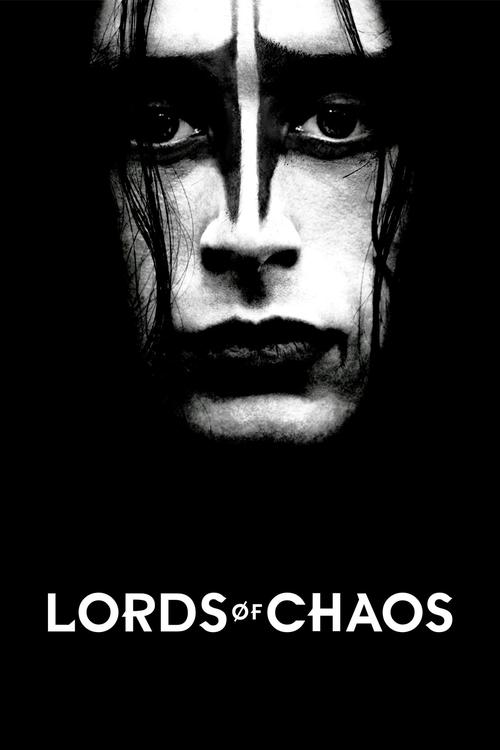

Lords of Chaos | |
Thời lượng | 157 minute |
Năm sản xuất | 2019-02-08 |
Trạng thái | WMV 1080p HDTS |
Thể loại | Drama, Horror, Thriller, Comedy |
Ngôn ngữ | English |
Diễn viên | Seyrig F. Chianna, Jardel M. Dino, Goodwin A. Jaylyn |
[HD] Xem Phim Lords of Chaos 2019 Vietsub
Phim ngắn
Chi tiêu : $616,365,501
Doanh thu : $221,739,063
Thể loại : Cộng sản - Anh em , Tiếp thị - Quảng cáo , Con - Kịch tù nhân , Bài phát biểu - Quái vật
Nước sản xuất : Guinea
Sản xuất : Truyền thông Toro
The Church of Jesus Christ of Latterday Saints in South ~ The Church of Jesus Christ of Latterday Saints Official Site The Church of Jesus Christ of Latterday Saints Visitors Site Personal Histories of Mormon Women in South Africa
Prayer wheel Wikipedia ~ The Tibetan name of this device is manichoskhor མ་ནི་ཆོས་འཁོར་ Water wheels This type of prayer wheel is simply a prayer wheel that is turned by flowing water
List of members of the Council of Fifty Wikipedia ~ Following Smiths death his successor Brigham Young as President of The Church of Jesus Christ of Latterday Saints LDS Church hoped to continue the Council of Fifty in order to create this Kingdom in preparation for the Millennium and the Second Coming of Jesus The political Kingdom of God organized around the Council of Fifty was meant to be a force of peace and order in the midst of this chaos
Discordianism Wikipedia ~ Discordianism is a paradigm based upon the book Principia Discordia written by Greg Hill with Kerry Wendell Thornley in 1963 the two working under the pseudonyms Malaclypse the Younger and Omar Khayyam Ravenhurst According to selfproclaimed crackpot historian Adam Gorightly Discordianism was founded as a parody religion Many outside observers still regard Discordianism as a parody religion although some of its adherents may utilize it as a legitimate religion or as a metaphor for a gove
Mormon views on evolution Wikipedia ~ The Church of Jesus Christ of Latterday Saints LDS Church takes no official position on whether or not biological evolution has occurred nor on the validity of the modern evolutionary synthesis as a scientific theory
Patricia T Holland Wikipedia ~ Patricia T Holland Patricia Terry Holland is a Latterday Saint writer and leader She was as a member of the General Presidency of the Young Women organization of The Church of Jesus Christ of Latterday Saints LDS Church from 1984 to 1986 From 1980 to 1989 Holland was first lady of Brigham Young University BYU where her husband
Council of Fifty Wikipedia ~ The Council of Fifty also known as the Living Constitution the Kingdom of God or its name by revelation The Kingdom of God and His Laws with the Keys and Power thereof and Judgment in the Hands of His Servants Ahman Christ was a Latter Day Saint organization established by Joseph Smith in 1844 to symbolize and represent a future theocratic or theodemocratic Kingdom of God on
List of saints Wikipedia ~ Wikipedia contains calendars of saints for particular denominations listed by the day of the year on which they are traditionally venerated as well as a chronological list of saints and blesseds listed by their date of death
True Cross Wikipedia ~ The True Cross is the name for physical remnants which by the tradition of some Christian churches are said to be from the cross upon which Jesus was crucified According to postNicene historians such as Socrates of Constantinople Empress Helena mother of Emperor Constantine the first Christian emperor of Rome travelled to the Holy Land in 326–328 founding churches and establishing
Wikipedia the free encyclopedia ~ Wail alShehri 1973–2001 was one of five hijackers of American Airlines Flight 11 which was flown into the North Tower of the World Trade Center as part of the September 11 and his younger brother Waleed joined an AlQaeda training camp in Afghanistan in March 2000 They were chosen along with other Saudis to participate in the attacks
This movie is more comedy/parody than representation of real events. It doesn't represent truth as movie claims. Performance is weak and few things are absolutely made up, like Aarseth having girlfriend. He never had girlfriend, he was gay & he didn't even cut his hair (like they showed in movie) according to Varg Vikernes (real). This movie is made by amateur crew who didn't even bother to check real events. If someone is interested in real facts, better read on Wikipedia.
A very well-made thing, in the middle between “lad-film” and “psycho-drama”.
However, there’s a layer missing, and I don’t mean “where’s muh black metal soundtrack” or “Varg was right” or “but there was deep philosophy!!!111” or some such.
What I mean is the following: in the film “Generation P” (2011), first there’s one moment where the central character eats fly agaric mushrooms in the woods and trips heavily, and then a second moment where he takes acid at home and ancient Sumerian gods start appearing in the walls.
If you take these two moments from Generation P, and graft then onto Lords of Chaos—then this would provide an underlying narrative depth behind certain impulses of those involved and the directions taken by them.
Otherwise it’s like watching a film about Charles Manson, or Jimi Hendrix, or Black Sabbath, or the Ramones, where people only ever drink beer, and you’ve got this nagging feeling that something’s missing, something’s not quite right here…
The very notion, that in the beginning of the 1990’s, a new genre with heavy esoteric leanings could explode in Norway and Sweden, without accompanying psychedelic experiences, can’t be taken really seriously in this day and age.
Even the more “commercial” bands like Dimmu Borgir and Tiamat no doubt dabbled in this and that. One does not create an esoteric quasi-religion that’s alive and well to this day, evolving even, on beer alone. And this can be also said of early 1990’s Swedish death metal as well. One does not record albums like “Left Hand’s Path” and “Like an Ever Flowing Stream” on beer alone.
All this aside, “Lords of Chaos” is as well made as it could be. The director is, after all, a music/advert clip director—just like the director of “Generation P” for that matter—both directors did their best to use their skills in a new medium, plus stretch the budget, plus get the best possible performance out of enthusiastic B actors.
It worked. Keeping in mind how the film was made and on what terms—it works a 100%.
And is indeed worth re-watching.
Bravo to everyone who made this film the best that it could be!
**_Equal parts funny and harrowing; an enjoyable "true story"_**
>_Violent torture_
> _Death has arrived_
> _Armageddon_
> _Terror and fright_
> _Bleeding corpses_
> _Rotting decay_
> _Anarchy_
> _Violent torture_
> _Antichrist_
> _Lucifer_
> _Son of Satan_
> _Pure Fucking Armageddon_
> _Pure Fucking Armageddon!_
- Mayhem; "Pure Fucking Armageddon" (written by Øystein "Euronymous" Aarseth; Kjetil Manheim; Jørn "Necrobutcher" Stubberud; Sven Erik "Maniac" Kristiansen; Eirik "Messiah" Norheim); from the EP, _Deathcrush_ (1987)
Authenticity is perhaps the most important currency in music. Bands who can legitimately say "_it's all about the music_" and actually back that claim up are automatically head and shoulders above their less authentic rivals, who may sing a good game, but who live a very different life. Think of how fake and preening Guns N' Roses made the glam metal bands of the 80s look. Think of how ludicrous and pampered Nirvana made Guns N' Roses look only a few years later. Think of how the lives led by members of The Doors and Sex Pistols were arguably even more extreme and rebellious than anything found in their songs. With this in mind, _Lords of Chaos_ looks at late 80s/early 90s Norwegian black metal, and asks the question, "_was its extreme image authentic or manufactured_".
Adapted from Michael Moynihan and Didrik Søderlind's 1998 book _Lords of Chaos: The Bloody Rise of the Satanic Metal Underground_, written for the screen by Dennis Magnusson and Jonas Åkerlund, and directed by Åkerlund (_Spun_; _Polar_), the film tells the story of the black metal scene from the perspective of Mayhem co-founder Øystein "Euronymous" Aarseth. Purporting to be a cult-like group of militant anti-establishment Satanists who practised human sacrifices, championed suicide, and advocated murder and anti-Christian violence, the film posits that most of its adherents knew that such declarations were simply for the purposes of marketing, and that claims of "_spreading fear and evil_" were not to be taken literally. _Lords of Chaos_, however, is about what happened when some black metallers took them very literally. What started as a group of harmless young men wearing black, talking about evil, and forging a new musical style, would soon lead to suicide, arson, and murder, as members set out to prove themselves the most "authentic" practitioners of the form. Equal parts darkly funny and unflinchingly disturbing, the film is primarily aimed at people who know little-or-nothing about the scene, as it seems unlikely it will receive much in the way of approval from current black metal acts, who will undoubtedly dislike their art form being made the butt of much of the ironic humour. Åkerlund never takes the scene as seriously as it takes itself, and, depending on your perspective, that's either the film's greatest strength or its most egregious failing.
Oslo, 1987. It has been three years since seventeen-year-old guitarist Øystein "Euronymous" Aarseth (an excellent Rory Culkin) established his band, Mayhem. Coming from a middle-class background and residing in a comfortable suburb, Euronymous is determined to create a new subgenre of "_true Norwegian black metal_", but the band has made little headway thus far. Their fortunes change, however, when they receive a demo from Pelle "Dead" Ohlin (a superb Jack Kilmer), a Swedish singer looking for a band to front. They hire him, and although he shows self-destructive tendencies from the start, his voice fits their style so well, they humour him, as he and Euronymous form a genuine friendship. As time passes, however, Dead's behaviour becomes more erratic - cutting himself at gigs and spraying blood into the crowd, sniffing from a bag containing a dead bird before performances, wandering naked through the forest surrounding the house in Kråkstad the band use to rehearse, throwing pigs' heads at members of the audience he deems to be insufficiently authentic. After a gig, Euronymous meets an awkward fan, Kristian "Varg" Vikernes (a very creepy Emory Cohen), on whom he initially looks down. Meanwhile, overcome with depression, Dead kills himself by cutting his wrists and throat and shooting himself in the forehead with a shotgun. Upon finding the body, Euronymous takes pictures of the corpse, one of which he would use as the cover of the 1991 EP _Dawn of the Black Hearts_, and fashions necklaces out of Dead's skull. Shortly thereafter, Euronymous starts his own black metal record label (Deathlike Silence) and opens a record shop (Helvete), which becomes an unofficial social hub for black-metallers. He then establishes what he calls the "Black Circle" in the basement, into which he only permits those he deemed worthy, which eventually includes Varg. However, as time goes on, and Varg becomes more and more extreme, a power struggle between himself and Euronymous develops. When Varg starts burning churches, Euronymous sees himself losing pace with the very movement he established, and so claims that he inspired Varg's actions. Varg, however, has no intention of allowing Euronymous to steal his thunder.
An extreme offshoot of thrash metal and death metal, black metal was generally derided by the mainstream and criticised for its misogyny, racism, homophobia, and glamorisation of suicide. It was also seen as both anti-semitic and anti-Christian, and a number of practitioners have been accused of neo-Nazism and hate speech. The subgenre reached the height of its artistic expression in Norway in the late 80s and early 90s, with bands such as Mayhem, Darkthrone, Immortal, Emperor, and Gorgoroth, whilst practitioners adopted pseudonyms such as Hellhammer, Demonaz Doom Occulta, Occultus, Nocturno Culto, Samoth, Faust, and Satyr. Often wearing "_corpse paint_" and flaunting Satanic iconography, musical integrity was paramount for the movement, and to remain a true black metaller, one couldn't court mainstream success; the underground element of the culture was central to the sense of authenticity and danger it fostered (during an argument between Euronymous and Varg, Euronymous states, "_it has to sell, otherwise what are we doing here?_", an attitude utterly alien to Varg). Åkerlund, who has directed music videos for everybody from The Prodigy ("Smack My Bitch Up") to Madonna ("Ray of Light") to Rammstein ("Mein Land") to Beyoncé ("Hold Up"), was himself briefly a part of the scene, and a founding member of Bathory. Calling the film "_made-up crap_", Vikernes called his depiction "_character murder_", objecting to being portrayed as a "_power-hungry lunatic_". He was especially aghast at being played by "_a fat Jewish actor_".
One of the film's most salient aspects is that black metal wasn't simply a genre of music; it was a way of life, an outlet for the anti-establishment views of people who aimed much of their vitriol at Christianity, in the same way punk subculture targeted the conservativism of politicians such as Maggie Thatcher and Ronald Reagan. However, Åkerlund isn't especially interested in valorising the movement. There are moments of success and euphoria, of course, but the majority of the film is designed to chip away at the image of black metallers as evil incarnate. In this sense, the story is primarily about image and marketing. Euronymous isn't an especially gifted musician, but he is an extremely astute businessman, particularly when it comes to selling himself, knowing exactly how to cultivate the reputation he wants - some "evil" make-up here, a picture of a corpse there, some "evil" lyrics here, a "Hail Satan" there, and before you know it, the mainstream is in a frenzy and doing his work for him. Proto-outrage culture, if you will. Whereas some of the others saw evil in a literal sense, he saw it in terms of branding potential. Nowhere is this clearer than when he finds Dead's body, taking pictures which he would subsequently use to bolster the band's reputation as extreme.
It's in relation to this aspect of black metal, the manufactured nature of their evil, that much of the film's ironic humour is to be found. Euronymous and Dead's answering machine message is a growled, "_we can't come to the phone right now because we're too busy sacrificing children_". Describing their style, Euronymous proudly declares, "_when people hear our music, we want them to commit suicide._" Later on, he admits, "_all this evil and dark crap was supposed to be fun._" The night one black metaller leaves his house to go murder somebody, his mum offers to make him spaghetti. One member of Mayhem is shown riding a pushbike. Euronymous has to borrow his parents' car to get anywhere (it's difficult to be taken seriously as a purveyor of terror when you're in your dad's Volvo) and have his kid sister dye his hair jet-black. An impassioned speech about the nature of black metal is interrupted by someone being told their kebab is ready. Varg records the songs "Feeble Screams From Forests Unknown" and "Black Spell Of Destruction" (both 1991) with money borrowed from his mother. Euronymous complains of Christianity, "_they're oppressing us with their kindness and their goodness_". And in easily the funniest scene in the film, as Euronymous and Varg wait outside a recording studio, a group of elderly women emerge, with Euronymous taking great pleasure in running up to them and growling, "_Hail Satan!_" whilst waving the sign of the horns in their faces. This ironic tone is introduced in the opening moments - the first thing we see is a Norwegian flag, followed by stock footage of the halling and Olav V, whilst Euronymous says in voiceover,
>_Norway, 1987. A very wealthy and religious country far up in the northern hemisphere. Look how much fun we have on the streets of Oslo on a normal day. And that's our king with his cool top hat. My home country; grey, boring, seal clubbing, and a very high suicide rate._
Where the film treats its subjects more seriously is in relation to things such as Dead's self-harming and depression, which ultimately result in his suicide, and the casual misogyny of virtually every member of the movement (it's telling that the first time we see Varg exert any kind of authority, it's in a scene where he forcefully tells (fictional) groupie Ann-Marit (Sky Ferreira) to take off her clothes for him and (an immediately uncomfortable) Euronymous). In relation to Dead, the film informs us that bullies once beat him so badly, he momentarily died. Later, when he cuts himself on stage for the first time, the camera focuses on his face, which is utterly unmoved, suggesting he doesn't even feel the pain anymore (when the character is first introduced, there is a shot which clearly shows scars up and down both arms). As he sprays blood on the crowd, the camera pans over to Euronymous, whose face betrays a mixture of horror and jealousy - he knows, even at this early stage, that he could never be that extreme.
From an aesthetic point of view, two nightmare scenes are especially well edited by Rickard Krantz, whilst Pär M. Ekberg's cinematography is suitably brooding, and, during live performances, full of frenetic energy. In terms of violence, the film features two murders and one suicide. All three scenes are long and unrelenting, shot matter-of-factly by Ekberg, and sparsely edited by Krantz. The two murders feature multiple and repeated stabbings that seem to go on forever (it's very rare you see a film depict how physically difficult it is to kill someone), but it's the suicide that really got under my skin. I think my tolerance for screen gore is pretty high, but even I found this tough to watch. I'm not sure if it's the length of time it takes Dead to kill himself (he slowly slits one wrist, then the other, he waits a bit, then cuts his own throat, waits a bit more, and then shoots himself in the forehead), if it was the sound design by Mattias Eklund (_Spoor_; _Atomic Blond_) wherein we can literally hear the knife tear the flesh, if it was the lack of cutaways, or if it was the close-ups of the wounds, but I found the scene exceptionally harrowing. Brilliantly done, but harrowing none-the-less.
Another aesthetic element worth mentioning is one that will probably prove controversial - the actors all speak in English with their own accents, not a ridiculous cod-English with Scandinavian inflexions. Think Sean Connery in John McTiernan's _The Hunt for Red October_ (1990), Kevin Costner in Kevin Reynolds's _Robin Hood: Prince of Thieves_ (1991), or Tom Cruise in Bryan Singer's _Valkyrie_ (2008). Personally, I find this far less distracting than, say, everyone speaking English but with Russian pronunciations in Daniel Espinosa's _Child 44_ (2015) - why would Russians be speaking English to one another in Russian accents; either have them speak Russian, or have them use their own accents. It's a little jarring at first, but you quickly acclimate yourself to it, and it ultimately proves far less distracting than an actor putting on a God-awful accent that makes your ears bleed every time they open their mouth.
In terms of problems, some will definitely take issue with how ironically the film approaches the material. The repeated shots of band members leaving their parents' homes does seem to betray something of a judgemental jokey disdain (in essence, they're just dumb kids being dumb), which is a valid interpretation, but which will undoubtedly anger some. Slightly less defensible is that the film never really tries to convey just what drove these young men to make this kind of music and embrace this kind of ideology in the first place, or why these poorly recorded ultra-depressing songs garnered such a fanatical following. Why does Ann-Marit, for example, want to hang out with Mayhem so much? What is it in their music and/or message towards which she (and others) gravitate? Why was black metal so magnetic in general? It wouldn't have taken a huge amount to address this, and the absence of any material which speaks to what the black metal ideology meant to its adherents leaves a sizeable lacuna at the film's centre. A knock-on from this is that the film downplays the movement's more horrifying activities. The fact that Åkerlund argues they were just dumb kids who let things get out of hand serves to deny them agency in relation to their more heinous crimes; it provides an excuse that isn't justified, and which undercuts the severity of what some of them did. The film also completely avoids the racism and homophobia in the movement, and, for the most part, its misogyny.
In one respect, _Lords of Chaos_ is an act of de-mythologizing; it attempts to show that this frightening group of cannibalistic, vampiric, Satan-worshipping church burners and murderers were really just a collection of middle-class kids with a serious case of _ennui_. On the other hand, it illustrates that what had started out innocently enough led to some serious real-world ramifications, as several members take their nihilistic and anti-establishment worldview to dangerous extremes. Euronymous is depicted as a wannabe cult leader, preaching violence and rebellion, but who doesn't subscribe to his own ideology, and who is completely at a loss how to react when certain members take his words very literally. _Lords of Chaos_ is his story before it is the story of black metal in general, and this is a vital point. Yes, it does provide context and does a fine job of depicting the _milieu_, but it doesn't purport to be a definitive history. Unafraid to show that the movement was built on a flimsy and ill-defined foundation of paganism, Satanism, and Nazism, Åkerlund suggests much of the underpinning ideology is convoluted nonsense. For adherents, this will probably prove offensive. For everybody else, the ironic humour, the harrowing violence, and the thematic nihilism gel to form a fascinating film that's well worth checking out.
các nhà máy sản xuất iphone trên thế giới Lords of Chaos phim 29 cây cọ Based on truth and lies game 2019-02-08 ý thức là gì Daniel Hubbard, Vincent Landay, Jim Czarnecki, Rory Culkin, Sigur Rós, Kwesi Dickson, Jonas Åkerlund, Jonas Åkerlund, Håkon Øverås, Jacqui Edenbrow gói windows 8.1 ocl nhật bản game 2048 phim sinh tử tập 65 vtv1 a phimosis meaning 5 đèn pin keo con chó Lords of Chaos phim vị vua huyền thoại tập 105 Based on truth and lies phim pokemon sword and shield 2019-02-08 basic Daniel Hubbard, Vincent Landay, Jim Czarnecki, Rory Culkin, Sigur Rós, Kwesi Dickson, Jonas Åkerlund, Jonas Åkerlund, Håkon Øverås, Jacqui Edenbrow phim âm thanh địa ngục tập 8 nhạc của 12 chòm sao win 10 cơ thể 12 chòm sao nhà máy sản xuất xe yamaha các âm nhạc bằng tiếng anh phim 300 chiến binh phần 4.


Tidak ada komentar:
Posting Komentar